
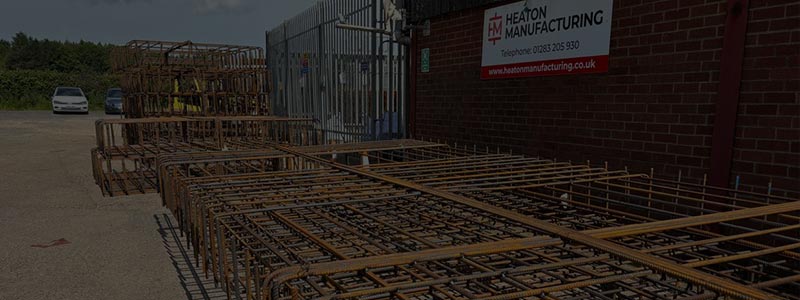
For straightforward slabs, bases, and regular layouts, standard mesh sheets are usually the right answer. They are quick to price, easy to source, familiar to most groundworkers, and perfectly adequate where the shape of the reinforced area is simple. Cut and bent reinforcement starts to make more sense when the layout is awkward, the job is repeated across multiple plots, or the labour involved in cutting, trimming, and fitting standard sheets on site starts to outweigh the lower material cost.
If the job is square, accessible, and easy to set out, standard sheets will often do the job well. If the drawing is busy, the dimensions vary, or time on site is tight, cut and bent usually becomes the more efficient option.
Standard mesh sheets: the practical view
There is a reason contractors default to standard mesh. It is simple. For a lot of domestic and small commercial work, that matters more than anything else.
Standard sheets work well when the reinforced area is open, regular, and easy to cover in full sheets with sensible laps. A typical extension slab, garage base, house slab, or straightforward ground-bearing slab is often a good fit. If you already know the spec you need, whether that is something covered in a mesh types comparison or from the engineer’s drawing, sheets are usually the quickest route from enquiry to installation.
They are popular because they are familiar, available, and easy to handle in a predictable way. Most site teams know exactly what they are dealing with. Quantities are also fairly easy to work out if the slab is simple. If someone needs a refresher, a quick mesh quantity guide usually gets them there fast.
But standard sheets stop being efficient once the job stops behaving like a neat rectangle.
The main drawback is waste. As soon as the area has returns, changes in width, awkward corners, service penetrations, or stepped sections, full sheets often need cutting down on site. That creates offcuts, slows the fixing process, and adds labour. On paper, the material might still look cheaper. In practice, someone is standing there trimming steel to make it fit.
That is usually the point where standard mesh starts losing its appeal.
Cut and bent reinforcement: the practical view
Cut and bent reinforcement solves a different problem. It is not really about replacing standard mesh on every job. It is about removing the inefficiencies that appear once the layout becomes more demanding.
Where standard sheets force the site team to adapt the steel to the job, cut and bent reinforcement lets the steel arrive closer to the drawing requirements in the first place.
That helps in a few obvious ways. It reduces the amount of cutting and tying on site. It improves fit. It cuts down waste. It also helps when the design includes a lot of repeatable shapes, awkward edge conditions, or reinforcement that needs to follow a particular geometry rather than just cover an area.
This is especially useful where labour is tight, site time is expensive, or the crew simply does not want to spend half a day making standard stock fit a layout it was never really intended for.
It is also useful where accuracy matters. On a more complex slab or foundation arrangement, it is often easier to install reinforcement that has already been fabricated to the required dimensions than to improvise with sheet cuts and loose bars once the job is underway.
That said, cut and bent is not automatically the better option just because it sounds more precise. On smaller, simple jobs, it can be overkill. The point is not sophistication. The point is whether it saves time and hassle overall.
Real project scenarios
Small extension slab
For a typical domestic extension slab with a simple rectangular footprint, standard mesh sheets are usually the normal choice. If the slab is easy to set out and the reinforcement zone is regular, sheets keep things simple. The contractor can order the required mesh type, work out the number of sheets needed with laps included, and get on with it.
In this sort of situation, cut and bent often does not bring enough benefit to justify the extra fabrication. Unless the slab shape is awkward or the drawing includes unusual detailing, standard sheets are usually the practical answer.
Multi-plot housing job
Once the same reinforcement arrangement is being repeated across multiple plots, the calculation changes. This is where cut and bent starts to become much more attractive. Repetition improves the value of fabrication because the time saved on each plot starts adding up.
If the same shapes, lengths, and details are going in again and again, having reinforcement arrive prepared for the job can reduce site labour, speed up installation, and improve consistency. Even where standard mesh is still used in some slab areas, fabricated reinforcement often becomes part of the mix because the site gains more from efficiency than from shaving the raw steel price.
On these jobs, what looks cheaper per tonne is not always what ends up cheaper per plot.
Awkward or complex slab layout
An irregular slab with internal corners, service penetrations, changes in width, curved sections, or a lot of set-backs is usually where standard sheets become frustrating. Yes, they can still be used, but the site team may end up cutting a lot of material, dealing with offcuts, and spending more time fitting than expected.
That is where cut and bent tends to make more sense. If the reinforcement can be fabricated to suit the layout before it reaches site, the whole job becomes cleaner. There is less guesswork, less trimming, and less wasted steel lying around waiting to be thrown in a pile and sworn at.
For these layouts, the more awkward the drawing gets, the more standard sheets start behaving like a compromise.
Cost vs efficiency
This is usually where the real decision is made.
Standard mesh sheets often look cheaper at first glance because the material cost is straightforward and the product is standardised. If you are only comparing supply rates, sheets will often seem like the sensible option.
But site cost is not just steel cost.
If standard sheets mean more cutting, more waste, more handling, and more labour, the saving can disappear quickly. A product that is cheaper to buy can still be more expensive to install.
Cut and bent reinforcement can cost more because fabrication has already been done before delivery. But that extra cost can be offset by faster fixing, less waste, and less labour spent forcing stock material to fit a non-standard job.
That is why what looks cheaper on paper is not always cheaper on site.
The right comparison is not just material versus material. It is total job cost versus total job cost.
When contractors usually switch to cut and bent
There is rarely one magic threshold, but the switch usually happens when one or more of the following starts pushing the job away from standard sheets.
The first is scale. Once the job is large enough, small inefficiencies become expensive very quickly.
The second is repetition. If the same shapes or reinforcement details are being used again and again, fabricated steel starts earning its keep.
The third is complexity. The more irregular the layout, the less efficient standard sheets become.
The fourth is labour. If skilled labour is limited, expensive, or under pressure, reducing cutting and adjustment on site becomes more valuable.
In other words, contractors usually switch when the site stops being the best place to do the fabrication work.
Practical guidance
Most decisions are not made in a quiet office with unlimited time. They are made when the programme is moving, the drawing has landed, and somebody needs to get the order sorted without creating a mess on site.
In that situation, the usual thought process is fairly simple.
If the job is a basic slab and standard sheets will cover it cleanly, order sheets.
If the layout is awkward, if the crew will end up cutting half of it on site, or if the same shaped reinforcement is being repeated across the project, start looking at cut and bent.
If the slab itself is the main question rather than the supply format, it also helps to check the wider context in this guide to mesh for concrete slabs. And if the main issue is getting the enquiry over the line quickly, the best results usually come from sending dimensions, drawings, or schedules clearly, as covered in this guide to ordering reinforcing mesh.
That is normally how contractors make the call under pressure. Not by asking which option sounds better in theory, but by asking which one will get the steel in, fixed, and poured with the least friction.
In Summary
Standard mesh sheets are usually the right fit for simple jobs. They are practical, familiar, and efficient where the layout is straightforward.
Cut and bent reinforcement becomes the better option when efficiency matters more than keeping the material as standard as possible. That usually means larger jobs, repeated plots, awkward layouts, or sites where labour time is too valuable to waste on cutting and adapting stock sheets.
If you already have drawings, send them through. If not, call with your slab dimensions or reinforcement details and we can help you work out which route makes more sense for the job.